Check-in
Short. What worked since last week, what didn’t, what came up. Both of you. We pace this so it doesn’t become its own argument.
Home · Our Approach · Couples Counseling
Our approachFor partners who can describe the cycle but can't seem to break it. Same-day appointments available, both partners present, working on the patterns rather than the latest argument.
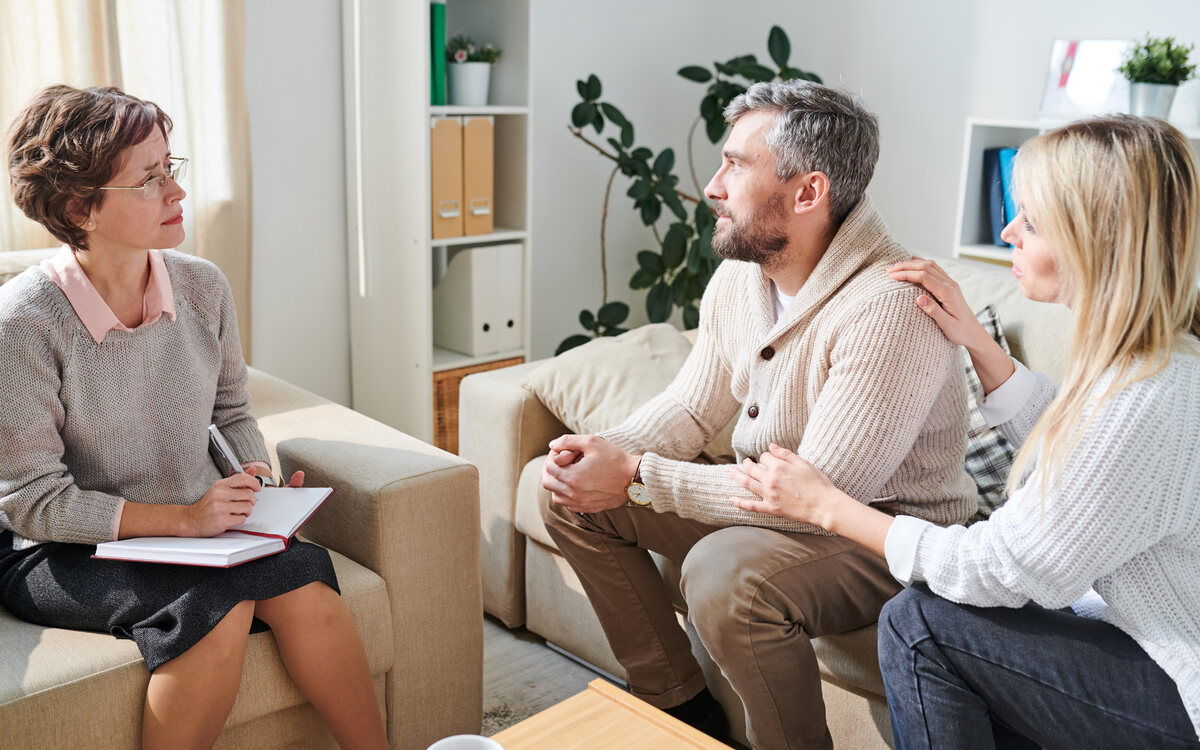
They come in because the small fights have started rhyming — same setup, same escalation, same regret.
What did each of you actually feel? Where did the chain of interpretations go off track? Where in the loop can you intervene?
The four “horsemen” (criticism, defensiveness, contempt, stonewalling) are real, common, and fixable.
The single most reliable predictor of whether couples therapy works is whether both partners can shift from “fix my partner” to “look at our pattern.”
Long-term couples don't usually come in because of one big fight. They come in because the small fights have started rhyming. Same setup, same escalation, same regret on the way home. The version of "we'll figure it out" that worked in year three has stopped working in year ten or thirteen or twenty-two, and you'd both like to know why.
Couples counseling at PCG is direct. We're not interested in long monologues or gentle nodding. We work the cycle.
Most couples don’t show up over one loud fight. They show up because the small ones have started rhyming. On couples
Not long monologues, not gentle nodding — we’re looking at the loop and learning to interrupt it together.
Short. What worked since last week, what didn’t, what came up. Both of you. We pace this so it doesn’t become its own argument.
A specific recent incident — small ones are often more useful than big ones. We walk through it slowly. What did each of you actually feel? Where did the chain of interpretations go off track?
Interrupt the cycle in real time during the session. Then build the skills that let you do it on your own — on a Wednesday at 9pm in your kitchen.
We draw heavily on John and Julie Gottman’s decades of research on what actually predicts relationship outcomes. The four “horsemen” (criticism, defensiveness, contempt, stonewalling) are real, common, and fixable.
So is the harder work: rebuilding fondness, replacing protest with bid-and-respond, repairing after rupture.
The most reliable predictor of whether couples therapy works is whether both partners can shift, even partially, from “fix my partner” to “look at our pattern.”
If only one of you is there yet — that’s also workable, but the right starting point is usually individual therapy for that partner first. We’ll tell you straight at intake.
Active intimate partner violence, ongoing physical fear, or a pattern of one partner being intimidated into silence — these are not appropriate conditions for couples sessions. The dynamic we’d be trying to change in the room is too unsafe to work directly. We assess this carefully on intake and refer to specialized resources when needed.
The National Domestic Violence Hotline is at 1-800-799-7233.
Both of you can be on the intake call, or one of you can call first. Either way works.
Information only. Descriptions of clinical approaches, methods, and session formats on this page are educational. Reading this page does not create a clinician-patient relationship and does not constitute a recommendation to begin, change, or end any course of treatment. The decision to enter therapy, select a particular modality, and continue or discontinue care is one to be made with a qualified, licensed clinician after individual evaluation. Do not use any content on this site to diagnose yourself. If you are in crisis, call or text 988 or call 911. Use of this site is subject to our Terms & Conditions, Privacy Policy, our Telehealth Agreement, our Treatment Consent, and our Notice of Privacy Practices — including binding arbitration under California Code of Civil Procedure §1295 for clinical-care disputes, mediation and arbitration of website-related disputes, class-action and representative-action waivers, jury-trial waiver, and California governing law and Los Angeles County venue.